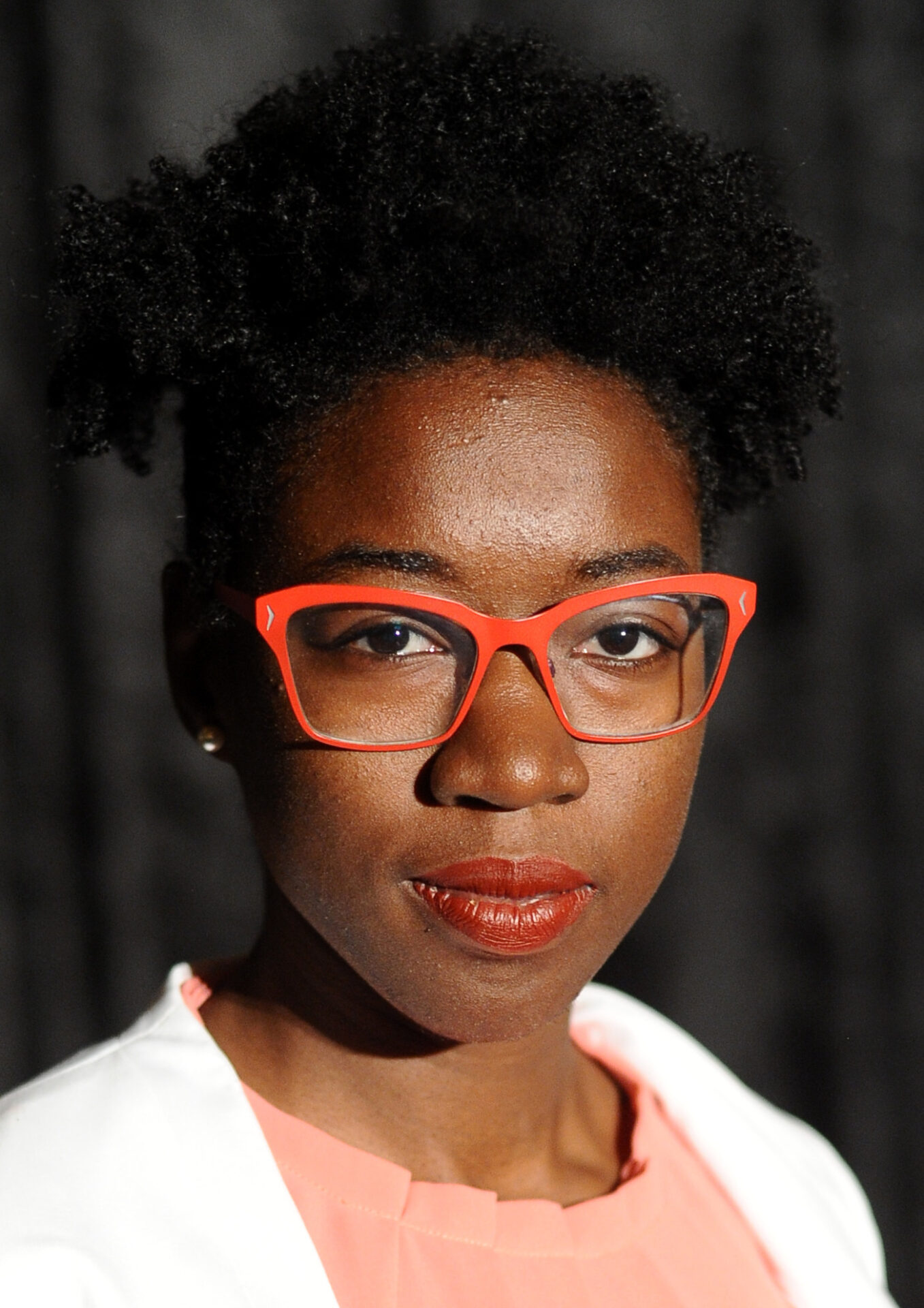
Joy Buolamwini was born in Edmonton, Canada, raised partly in Mississippi, and studied computer science at Georgia Tech before a Fulbright fellowship took her to Zambia to build health-education apps, and a Rhodes Scholarship took her to Oxford. She eventually landed at MIT’s Media Lab, where, as a graduate student working on a facial-analysis art project, she discovered that standard facial-detection software wouldn’t register her face at all, until she put on a plain white mask, which the system read instantly.
That discovery didn’t stay a curiosity. It became the starting point for “Gender Shades,” a 2018 study Buolamwini co-authored with fellow researcher Timnit Gebru, auditing commercial gender-classification systems from IBM, Microsoft, and Face++. The results were stark: error rates as high as 34.7% for darker-skinned women, compared to under 1% for lighter-skinned men, a gap the study traced partly to training datasets that skewed overwhelmingly toward lighter-skinned subjects. Buolamwini gave the underlying problem a name that stuck: the “coded gaze,” the way a system built mostly by one kind of person tends to see mostly that kind of person clearly.
She founded the Algorithmic Justice League to keep pushing the research into public view, testified before the U.S. House of Representatives on facial recognition’s civil rights impact, and published “Unmasking AI” in 2023. The research didn’t stay academic. In 2020, following mounting pressure that included her work, IBM announced it would stop developing facial recognition technology, Amazon paused police use of its Rekognition system, and Microsoft said it would withhold sales to police pending federal regulation.
October’s theme has run through hidden calculations, hidden vaccines, and hidden code. Buolamwini’s work closes the loop: sometimes the code isn’t hiding the people who built it. It’s hiding what they didn’t think to check.