
Zora Neale Hurston
The Genius of the South
Zora Neale Hurston was a woman who lived “with the sun in her face.” At a time when the world expected Black women to be silent or subservient, Hurston was loud, intellectual, and fiercely independent. Her life and work represent a bridge between the raw folk traditions of the rural South and the sophisticated intellectualism of the Harlem Renaissance.
Hurston’s greatest strength was her refusal to participate in “respectability politics.” While many of her contemporaries, like Richard Wright, focused their writing on the brutal realities of Jim Crow to elicit sympathy or change from white society, Hurston turned her lens inward. She was interested in how Black people lived, loved, and laughed when white people weren’t in the room. This focus was best exemplified in Their Eyes Were Watching God. Through the character of Janie Crawford, Hurston explored themes of female empowerment and self-actualization. Janie’s journey to find her “tongue” echoed Hurston’s own journey as a scholar and writer.
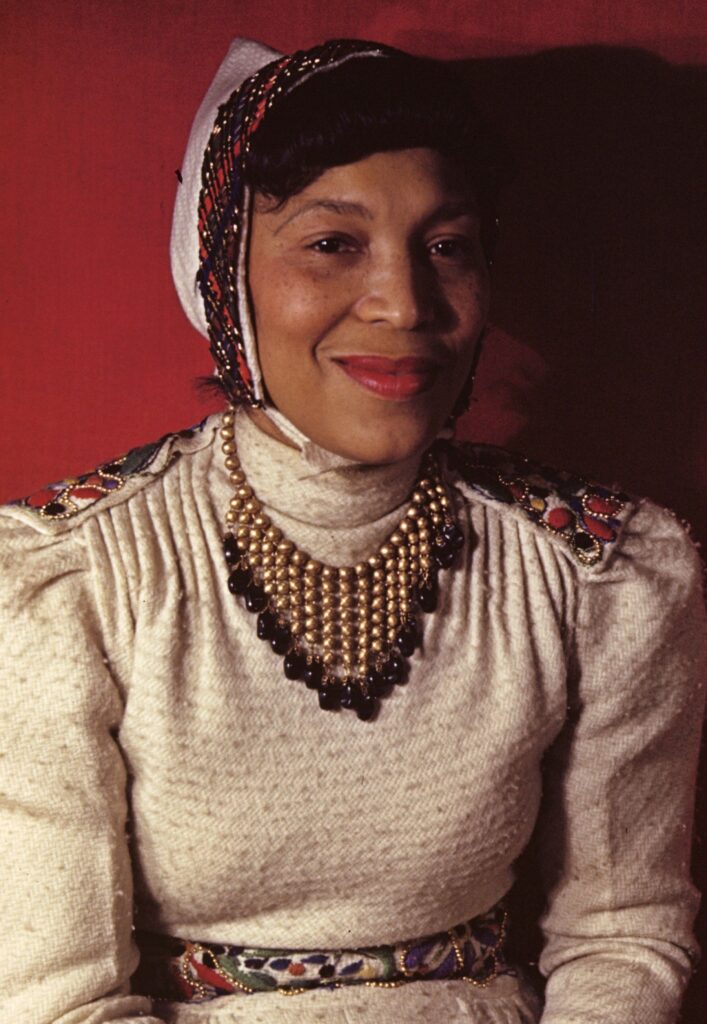
However, Hurston’s path was never easy. Despite her brilliance, she often struggled financially. Her insistence on writing in dialect was criticized by some Black intellectuals who felt it played into stereotypes. Yet, Hurston remained undeterred. As an anthropologist, she traveled the backroads of Florida and the islands of Haiti, often at great personal risk, to record the songs and stories of the African Diaspora. She understood that if she didn’t record these traditions, the “folk” soul of the people would be erased by the march of modernity.
Her later years were marked by hardship and obscurity. She died in 1960 in a welfare home and was buried in an unmarked grave. For over a decade, her books were out of print and her name nearly forgotten. It wasn’t until the 1970s, when Alice Walker sought out her grave and declared her “A Genius of the South,” that the world rediscovered Zora.
Today, Hurston is recognized not just as a writer, but as a cultural conservator. She taught us that there is dignity in the vernacular and power in the “common” story. Her legacy is a testament to the fact that authenticity is the most enduring form of art. She didn’t write to fit into a system; she wrote to build a world where she—and women like her—could finally breathe. Zora Neale Hurston remains a beacon for anyone searching for their own “horizon,” proving that even when the world tries to dim your light, the truth of your voice can never truly be buried.
Learn More
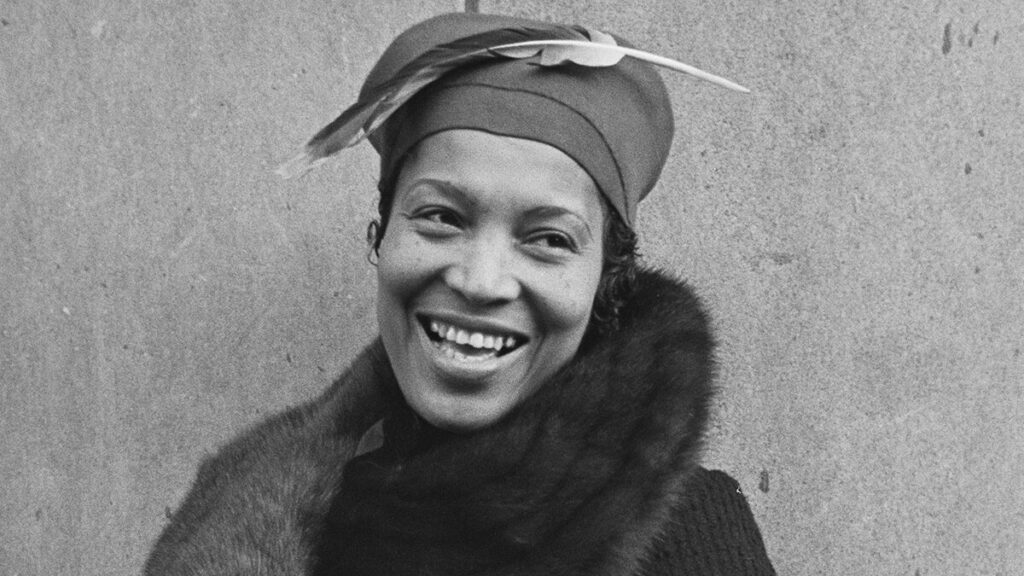
Zora Neale Hurston’s life proves that intellectual sovereignty is the ultimate form of rebellion. She refused to let her identity be defined solely by the tragedy of racism, choosing instead to highlight the joy, complexity, and linguistic richness of her people. Her “voice” resonates today because she reminds us that the stories of the marginalized are not just footnotes—they are the foundation of culture. She laid the groundwork for modern writers like Alice Walker and Toni Morrison by proving that a Black woman’s search for self is a universal epic.