

Carrie Mae Weems
The Architect of the Gaze
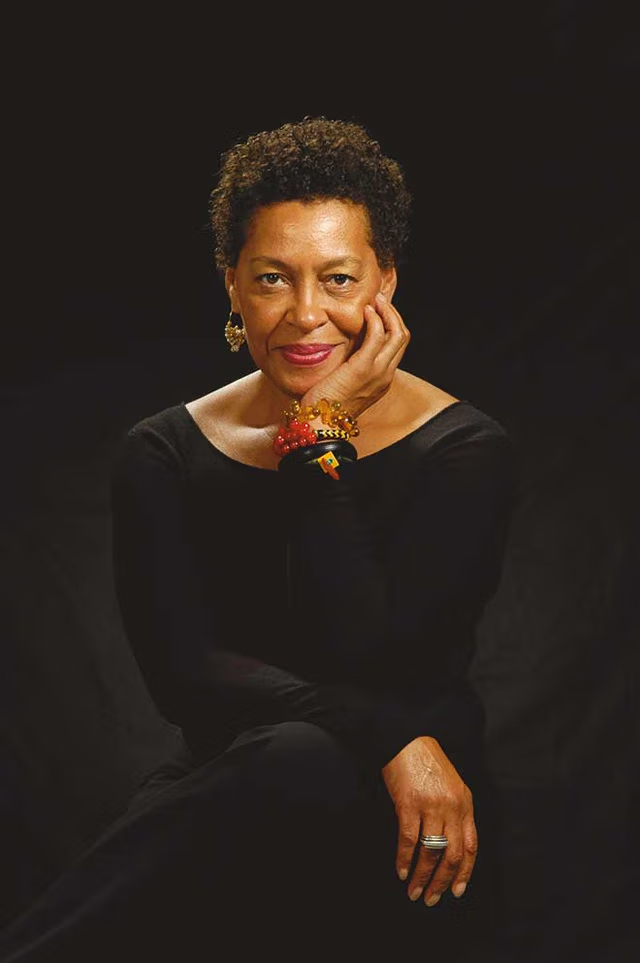
Carrie Mae Weems is more than a photographer; she is a visual philosopher. For over four decades, she has used the medium of photography, film, and installation to investigate the complex systems of power that govern our lives. While many artists focus on the aesthetic beauty of the image, Weems focuses on its consequence—how images have been used to oppress, and how they can be used to liberate.
Her most celebrated work, The Kitchen Table Series (1990), remains a masterclass in narrative art. In it, Weems plays a woman sitting at her kitchen table, engaged in various acts of daily life: talking with friends, playing cards, parenting, or sitting in solitary reflection. By using a single, unchanging setting, she forces the viewer to focus on the nuances of relationship and identity. She took the Black female body—so often fetishized or ignored in art history—and made it the protagonist of a universal human drama. This series didn’t just change photography; it changed the way museums understood their responsibility to represent diverse lived experiences.
Weems is also a rigorous historian. In her series From Here I Saw What Happened and I Cried, she used found imagery—specifically daguerreotypes of enslaved people—and tinted them deep red. By layering text over these images, she gave a voice back to individuals who had been treated as scientific specimens. This act of “reclamation” is central to her legacy. She understands that the lens has historically been used as a weapon of the state, and she successfully repurposed it as a tool for restorative justice.
In 2013, when she was awarded the MacArthur Fellowship and given a retrospective at the Solomon R. Guggenheim Museum, it was a symbolic victory for the entire art world. It signaled a shift toward acknowledging that the “American experience” is incomplete without the specific, layered, and often painful contributions of Black women.
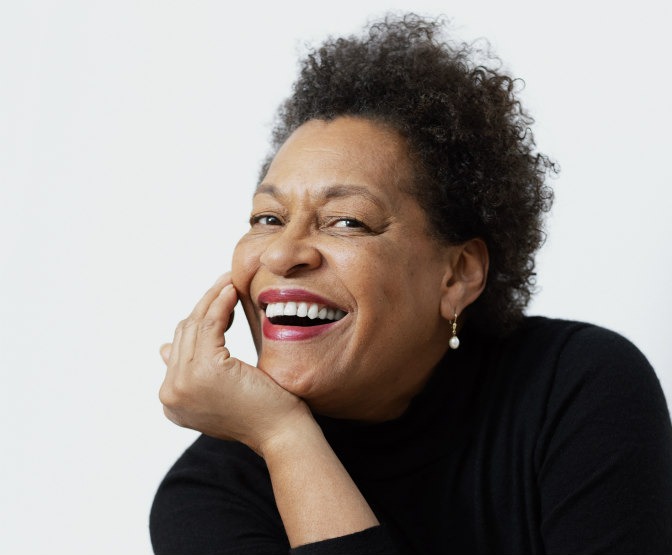
Today, Weems’s influence is seen everywhere, from the cinematography of modern cinema to the staging of contemporary fashion photography. She taught us that the gaze is never neutral. Every time we look at a photograph, we are participating in a power dynamic. Her life’s work serves as a reminder that we must be active viewers of our own history. Carrie Mae Weems continues to stand as a monumental figure who proved that art is not just a reflection of reality, but a powerful engine for social change.
Learn More
Carrie Mae Weems’s life proves that representation is a form of power. She did not just take pictures; she dismantled the way we “see” race, gender, and class. By placing herself or her subjects in positions of quiet authority, she laid the groundwork for modern visual culture to move beyond stereotypes. Her “voice” still resonates because she demands that we look at the parts of history that are uncomfortable, proving that until we confront the past’s visual biases, we cannot truly see the present.