

Arturo Schomburg
The History Hunter of the African Diaspora
History is often written by those in power, and for centuries, the archives of the Western world were designed to exclude the contributions of the African Diaspora. Arturo Schomburg, a self-taught Afro-Puerto Rican bibliophile and activist, understood that to be erased from the record is to be denied a future. His life’s work was a radical act of recovery, a relentless “history hunt” that transformed the global understanding of Black achievement from a fragmented collection of stories into an undeniable, evidence-based civilization.
Born in 1874 in Santurce, Puerto Rico, Schomburg’s path was set by a moment of profound intellectual insult. While in grade school, a teacher told him that “the Negro has no history.” This lie did not discourage him; it radicalized him. When he immigrated to New York City in 1891, he brought with him a hunger for the truth that would define the rest of his life. Working by day as a clerk at a law firm and later at Bankers Trust, he spent his nights and every spare cent scouring bookstores, auction houses, and private collections across the globe. He was looking for the “missing links”—the manuscripts, slave narratives, poems, and artworks that proved Black people had been central to the progress of humanity since the beginning of time.
Schomburg’s brilliance lay in his realization that identity is built on evidence. During the Harlem Renaissance, while poets and musicians were creating a new cultural language, Schomburg was providing the historical “proof” that grounded their movements.
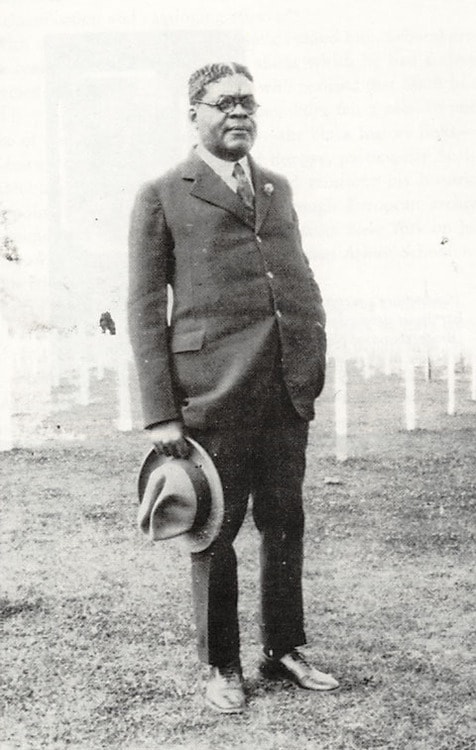
He famously argued that “the American Negro must remake his past in order to make his future.” He wasn’t just collecting books; he was collecting a “war chest” of facts. By the 1920s, his personal collection grew so large that it filled his home from floor to ceiling, eventually totaling over 10,000 items. This treasure trove included rare works by Phillis Wheatley, the journals of Benjamin Banneker, and documentation of Black military service in the American Revolution.
In 1926, the Carnegie Corporation purchased his collection for $10,000 and donated it to the New York Public Library’s 135th Street Branch. This became the foundation of the Schomburg Center for Research in Black Culture. By making these records public, Schomburg shifted the burden of proof. It was no longer a matter of opinion whether Black people had a history; the evidence was now housed in a world-class institution for all to see.
Arturo Schomburg is the “Root” of our historical pride. He proved that the library is a site of resistance. He laid the groundwork for the global study of the African Diaspora, linking the struggles and successes of Black people in Europe, the Caribbean, and the Americas into one continuous narrative. His life reminds us that when history is stolen, it must be hunted down and brought home. Because of Schomburg, we don’t just have stories—we have our soul.
Learn More
Arturo Schomburg’s life proves that identity is a radical act of assembly. By refusing to let a teacher’s lie stand, he built the physical evidence required to challenge global white supremacy. He laid the groundwork for modern Black Studies by showing that history is not just a collection of stories, but a war chest of evidence used to fight for human dignity. His “voice” resonates today every time a student discovers an ancestor who was erased from the curriculum.