
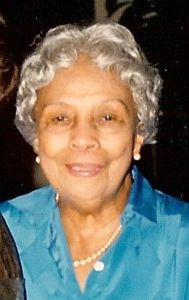
Dorothy Porter Wesley
The Librarian Who Reordered the World
In the quiet aisles of the Moorland-Spingarn Research Center at Howard University, a quiet revolution was staged not with weapons, but with ink, card catalogs, and an uncompromising intellect. Dorothy Porter Wesley, a librarian and curator, understood a truth that many in the early 20th century ignored: how a society organizes its information determines how that society perceives its people. Her life’s work was the systematic dismantling of a biased knowledge structure, replacing it with a blueprint that allowed Black intellectualism to be seen in its full, radiant complexity.

Born in 1905, Wesley entered a professional world where the dominant system of library classification—the Dewey Decimal System—was a tool of intellectual segregation. Under the standard rules of the time, almost every book written by a Black author or concerning Black life was funneled into two narrow, disparaging categories: “Slavery” or “The Negro Problem.” To the gatekeepers of information, the Black experience was a monolith of tragedy and a subject of sociological debate, rather than a source of philosophy, science, or art. Wesley recognized that as long as Black achievement was “shelved” as a problem, it could never be studied as a contribution to civilization.
When she became the curator of the Moorland Foundation at Howard University in 1930, she set out to physically and intellectually reclassify the world. She famously stated, “I’ve been a librarian all my life. I think the records of a people are their very soul.” To save that soul, she had to break the rules of the Dewey Decimal System. She began a decades-long process of moving Black authors out of the “Slavery” section and into their rightful academic disciplines. Under Wesley’s hands, a Black poet was filed under Poetry; a Black chemist was filed under Chemistry. By doing this, she forced researchers and students to acknowledge that Black people were creators of civilization, not merely subjects of oppression.
Wesley’s legacy extends far beyond the organization of books. She grew Howard’s collection from a small room of several thousand items to a world-class research center containing over 180,000 pieces of history. She became a “bibliographical bridge,” publishing massive, meticulously researched bibliographies that provided the primary source material for the first generation of Black Studies scholars in the 1960s. Without her preservation work, much of the evidence of early Black excellence would have been lost to time or buried in prejudiced archives.
Today, Dorothy Porter Wesley is recognized as the “Root” of information justice. Her work proves that the way we categorize data is a political act. She laid the groundwork for modern digital ethics and algorithmic fairness; she was the original “Data Detective,” spotting the bias in the system and rewriting the code. Her life reminds us that true liberation requires us to own our records, tell our stories, and—most importantly—ensure that we are the ones who decide where those stories are placed in the grand library of human history.
Learn More
Dorothy Porter Wesley proves that how we organize information is a political act. By moving Black books out of the “Slavery” section and into “History” and “Science,” she forced the world to acknowledge Black people as creators of civilization rather than just subjects of a “problem.” Her work is the root of every Black Studies department today.
- The Moorland-Spingarn Research Center (Howard University): The institution Dorothy built into a global powerhouse. It remains one of the world's largest and most comprehensive repositories of the Black experience.
- Smithsonian Magazine: Remembering the Howard University Librarian Who Decolonized the Way Books Were Catalogued
- JSTOR: What Dorothy Porter’s Life Meant for Black Studies