

Frankie Knuckles
The Godfather of House
To understand Frankie Knuckles is to understand the power of the “underground.” In the late 1970s, mainstream America had declared “Disco is Dead,” fueled by a reactionary movement that was as much about racial and homophobic anxiety as it was about music. But in Chicago, at a three-story factory building known as The Warehouse, Frankie Knuckles was proving that the spirit of the dance floor was very much alive.
Knuckles arrived in Chicago from New York with a crate of records and a vision. He found a crowd—mostly Black, gay, and Latino—that needed an escape from the harsh realities of the city. Because new disco records were no longer being produced at the same rate, Knuckles had to innovate. He began editing tracks manually, using a reel-to-reel machine to extend the “breaks” that people loved to dance to. When he introduced the Roland TR-909 drum machine into his sets, he added a mechanical, “thunderous” heartbeat to the soulful melodies. This was the birth of House music: a pulsating, democratic sound that felt both futuristic and deeply ancient.
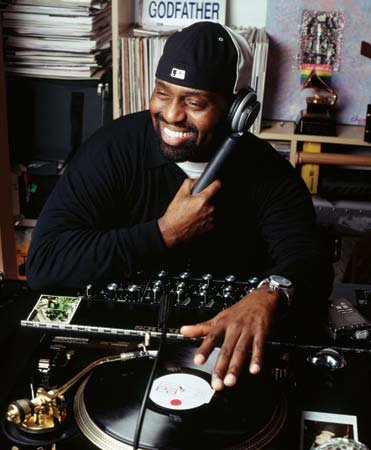
The Warehouse became more than a club; it was a church for the unchurched. Knuckles often spoke about the “internal work” of a DJ, viewing his role as a responsibility to guide his “congregation” through a journey of redemption. On his dance floor, social barriers dissolved. It was one of the few places in a segregated city where different races and sexualities could merge into a single, sweating personality. This “utopian” vision of the dance floor remains the gold standard for club culture worldwide.
As the sound migrated from Chicago to the UK and beyond, Knuckles became a global ambassador. He transitioned into production, creating timeless classics like “Your Love” and “The Whistle Song.” These tracks weren’t just “club hits”; they were sophisticated compositions that brought a sense of elegance and melody to electronic music. His 1997 Grammy win was a watershed moment, finally acknowledging the DJ as a pivotal figure in modern music production.
Even as House music evolved into a commercial behemoth, Knuckles remained the “Godfather,” always pulling the focus back to the song and the soul. He famously noted that “the minute you think you’re greater than the music, you’re finished.” He died in 2014, but his impact is etched into the very streets of Chicago, where a stretch of Jefferson Street is now named “Frankie Knuckles Way”—a campaign supported by then-Senator Barack Obama. Frankie Knuckles didn’t just give us a genre; he gave us a way to find freedom in the rhythm. He proved that even in the darkest corners of a warehouse, you can find the light.
Learn More
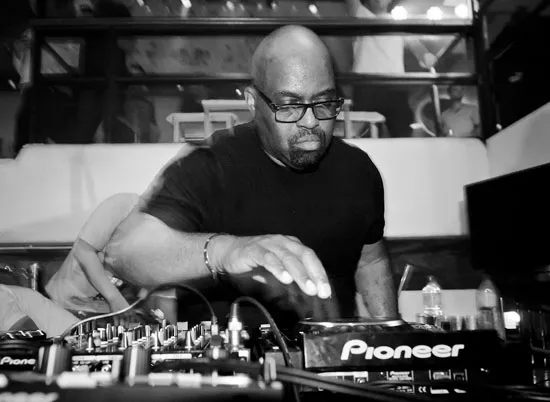
Frankie Knuckles’ life proves that community is the mother of invention. He didn’t set out to create a billion-dollar industry; he was simply trying to keep his people dancing in the face of a world that wanted them invisible. He transformed the DJ from a human jukebox into a “priest of the dancefloor,” proving that repetitive rhythm could be a form of healing and spiritual release. His legacy still resonates in every club and festival today, reminding us that House music isn’t just a sound—it’s an inclusive philosophy that says, “If you’re under this roof, you belong.”