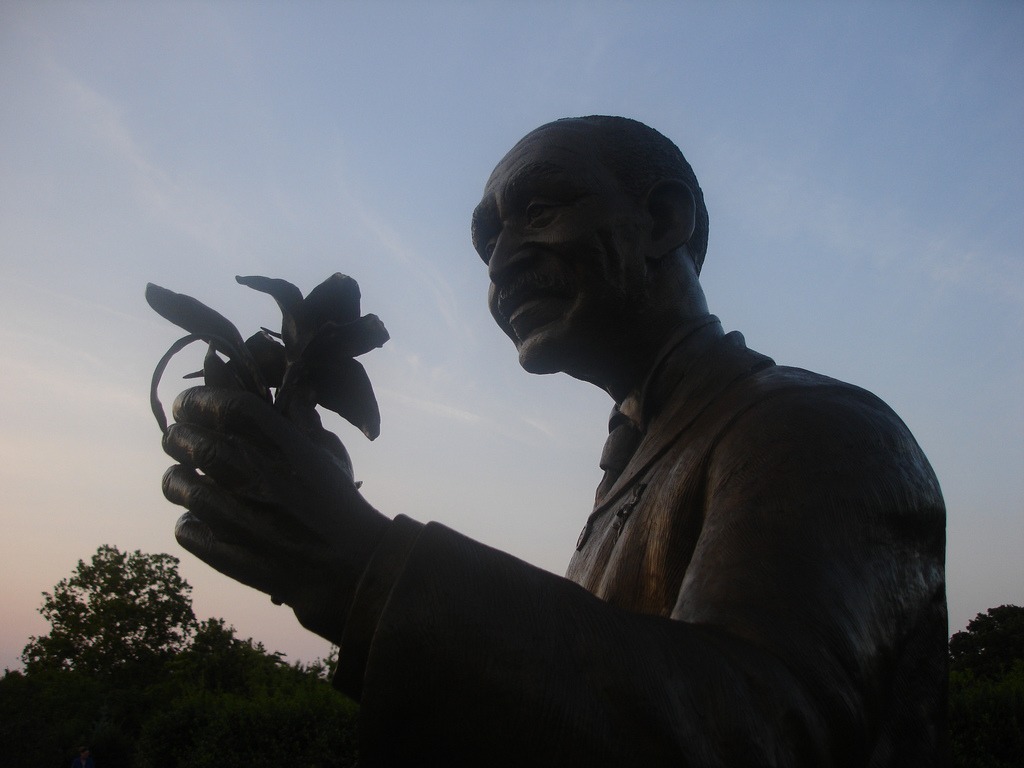

George Washington Carver is often reduced in history books to “the man who did things with peanuts,” but this simplification does a disservice to one of the most sophisticated scientific minds of the 20th century. Carver was not merely an inventor; he was a social ecologist. His work at the Tuskegee Institute was a radical attempt to use chemistry and botany to dismantle the economic shackles of the post-Reconstruction South.
When Carver arrived in Alabama in 1896 at the invitation of Booker T. Washington, he found a landscape in crisis. Decades of intensive cotton farming had stripped the soil of its nutrients, leaving the land barren and the farmers—mostly Black sharecroppers—trapped in a cycle of poverty and debt. Carver’s primary contribution was the introduction of crop rotation. By teaching farmers to plant legumes like peanuts and cowpeas, which naturally return nitrogen to the soil, he provided a way to restore the land’s fertility while offering a new source of protein for impoverished families.
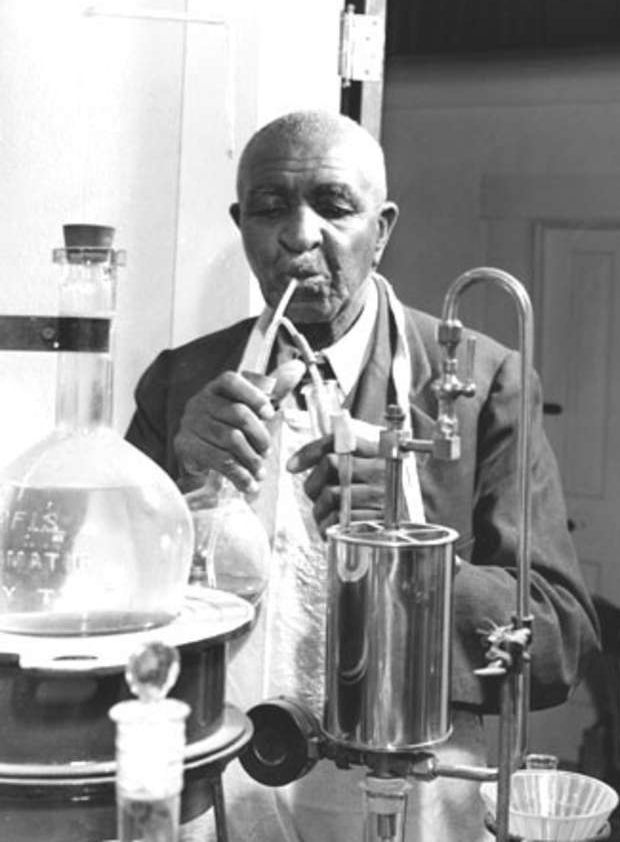
However, Carver’s genius truly shone when he addressed the economic side of the equation. He realized that if farmers grew peanuts instead of cotton, they needed a market for them. This led to his prolific period of “chemurgy”—the branch of applied chemistry that turns agricultural raw materials into industrial products. In his laboratory, which he famously built out of salvaged materials, he synthesized everything from plastics and paints to synthetic rubber and milk substitutes. He wasn’t just playing with plants; he was creating a self-sufficient economy for a people who had been systematically excluded from the American Dream.
Carver’s approach to science was also deeply spiritual and holistic. He often rose at 4:00 AM to walk in the woods, claiming that “nature is the greatest teacher.” This perspective made him a pioneer of what we now call biomimicry and sustainable development. Long before the “Green Revolution” of the mid-20th century—which relied heavily on chemical fertilizers—Carver was advocating for organic fertilizers like swamp muck and compost. He saw the earth as a closed system where nothing should be wasted.
His legacy is one of profound humility. Despite being consulted by world leaders like Mahatma Gandhi and industrial giants like Henry Ford, Carver remained at Tuskegee for 47 years. He turned down lucrative job offers because his loyalty was to the people of the “Black Belt.” George Washington Carver reminds us that the highest form of science is that which stoops down to help the person furthest behind. His life serves as a bridge between the ancient wisdom of the land and the modern necessity of conservation.