

Latanya Sweeney
The Guardian of the Digital Identity
In the modern era, the battlefield for civil rights has shifted from the physical archives of the past to the invisible data streams of the present. At the forefront of this digital frontier is Dr. Latanya Sweeney, a scholar whose work serves as a bridge between high-level computer science and the protection of human dignity. As the first Black woman to earn a PhD in Computer Science from MIT, Sweeney has dedicated her career to a singular, urgent truth: data is never truly anonymous, and without rigorous oversight, technology becomes a tool for profiling rather than progress.
Sweeney’s journey began with a profound moment of “data detective” work that would change the landscape of privacy law forever. In the late 1990s, the state of Massachusetts released “anonymized” health records of state employees, claiming that because names had been removed, the data was safe. Sweeney suspected otherwise. By cross-referencing these medical records with public voter registration rolls—using only a ZIP code, birth date, and gender—she successfully identified the personal medical history of the Governor of Massachusetts. This experiment proved that 87% of the American population could be uniquely identified by those three simple pieces of information. This wasn’t just a technical achievement; it was a warning. It proved that in the information age, visibility can be a weapon.
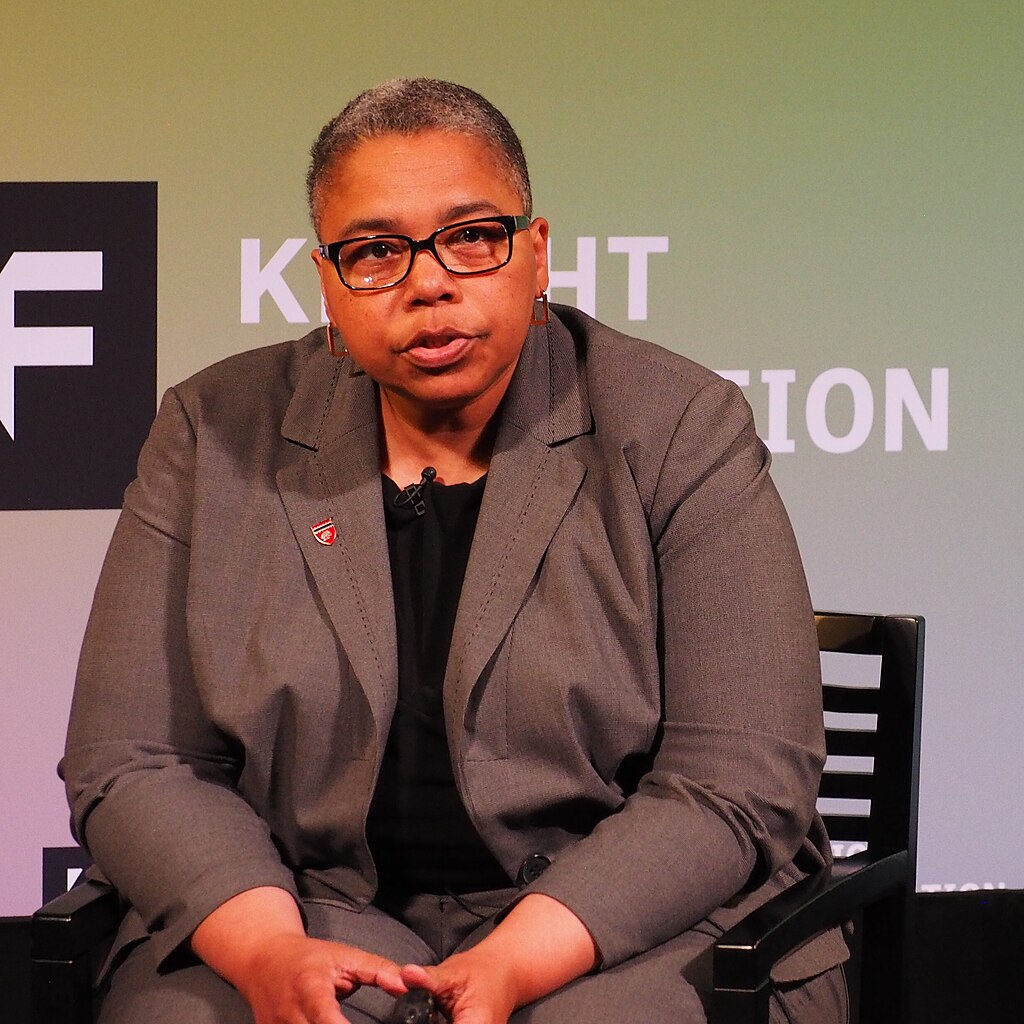
This discovery led Sweeney to invent k-anonymity, a mathematical model that has since become a global standard for protecting individual privacy in large datasets. Her work ensures that even as we share data to improve healthcare or urban planning, the individuals within that data remain protected from re-identification. She essentially created the “digital shield” that prevents our most sensitive information from being used against us.
Beyond privacy, Sweeney has been a pioneer in exposing “algorithmic bias.” In a landmark 2013 study, she documented that Google searches for “Black-sounding” names were significantly more likely to trigger advertisements for criminal background checks than searches for “white-sounding” names. This research proved that the internet’s infrastructure was inheriting—and amplifying—the racial prejudices of society. By bringing this to light, she forced tech giants and policymakers to acknowledge that “neutral” technology is a myth.
As a former Chief Technologist for the Federal Trade Commission (FTC), Sweeney took her laboratory findings to the halls of government, advocating for consumer protections in the age of Big Data. Her life’s work mirrors the efforts of Dorothy Porter Wesley and Arturo Schomburg; while they fought to ensure Black history was recorded and classified with respect, Sweeney fights to ensure that Black futures are not unfairly targeted by the code that governs our lives. She is our digital architect, proving that the highest calling of technology is not just efficiency, but the preservation of the human soul in the machine.
Learn More
Latanya Sweeney’s life proves that privacy is a civil right. While her historical counterparts fought to make Black history visible, she fights to ensure that modern Black lives aren’t unfairly targeted or “profiled” by the data systems that govern our world. She laid the groundwork for modern data ethics, reminding us that behind every algorithm is a human being whose story deserves protection.