
Rediet Abebe
Engineering the Path to Algorithmic Justice
In the traditional narrative of scientific excellence, mathematics is often presented as a pursuit of “pure” truth—a world of abstract equations existing far above the messy realities of social struggle. However, Rediet Abebe, a computer scientist and Junior Fellow at the Harvard Society of Fellows, has dismantled this ivory tower. Her work represents a bridge between the foundational rigor of Dorothy Porter Wesley’s archival systems and a future where digital code acts as a tool for equity rather than an engine for exclusion.
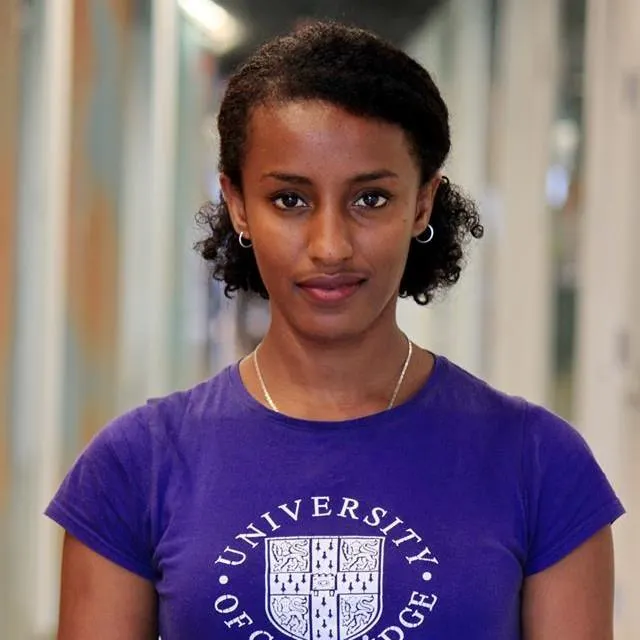
Born and raised in Addis Ababa, Ethiopia, Abebe moved to the United States to study mathematics at Harvard and Cambridge. While she excelled in the elegant logic of pure math, she experienced a profound “turning point” upon realizing that the beautiful systems being built by Silicon Valley were often harming the most vulnerable members of society. She saw that algorithms—the invisible architects of modern life—were being used to decide who gets a loan, who gets a job interview, and who receives social services. Crucially, she realized these systems were being designed without the input of the very people they impacted most.
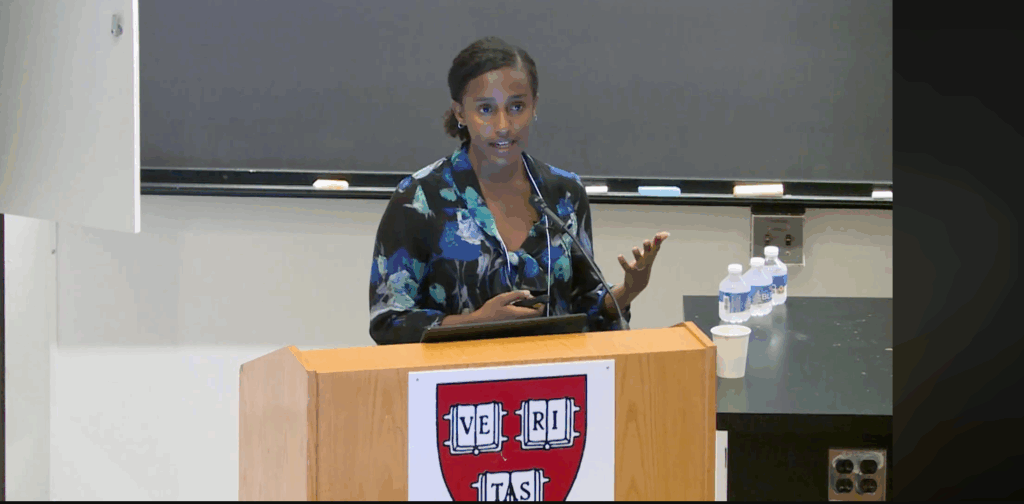
Abebe’s brilliance lies in her refusal to separate technical mastery from social responsibility. She transitioned into computer science to address what she calls “Mechanism Design for Social Good” (MD4SG). This initiative uses mathematical modeling to tackle deeply rooted societal problems, such as housing instability and income inequality. By treating these social issues as technical challenges that require diverse perspectives, she has forced the tech industry to acknowledge that “efficiency” is not a substitute for fairness.
One of her most significant contributions to the “Future” of Black excellence is the co-founding of Black in AI. This global network was born out of a stark reality: at the world’s largest AI research conference in 2016, Abebe was one of only a handful of Black researchers in attendance. By creating a pipeline for Black scholars to enter the field of Artificial Intelligence, she isn’t just diversifying a workforce; she is changing the “DNA” of the technology itself. Her work ensures that as we move into a world governed by machine learning, the data sets used to train these machines include the histories and nuances of the African Diaspora.
Rediet Abebe’s story proves that math is a tool for justice. Just as the pioneers of the past fought for physical space and legal rights, Abebe is fighting for “digital sovereignty.” She is the voice ensuring that as we build the automated systems of tomorrow, the “soul of the records”—as Dorothy Porter Wesley called them—remains inclusive. Her life exemplifies a new era of excellence: one where the highest level of intellectual achievement is measured by how much it empowers the marginalized. In the relay race of Roots & Futures, Rediet Abebe has taken the baton of information management and carried it into the code of the next century.
Learn More
Rediet Abebe’s life proves that math is a tool for justice. Just as Dorothy Porter reorganized physical library cards, Abebe is reorganizing the digital code that governs our lives. She is the voice ensuring that as we move into an AI-driven future, the “soul of the records” remains inclusive and equitable.