
March: The Sovereignty of Land
March explored the profound relationship between Black liberation and the land — from Fannie Lou Hamer's Freedom Farm to Ron Finley's urban gardens. True sovereignty requires a connection to the earth.
March explored the profound relationship between Black liberation and the land — from Fannie Lou Hamer's Freedom Farm to Ron Finley's urban gardens. True sovereignty requires a connection to the earth.
Tuesdays with Junior | Ep 9 | March 3, 2026 First Tournament Win The moment you’ve been training toward doesn’t announce itself. One week, you’re grinding through drills, breaking down film, and trusting a process that only shows results in…

Rachel Cargle’s life proves that joy is a metric of success. She has laid the groundwork for a modern movement where "self-care" isn't just a marketing buzzword, but a political strategy for survival. Her "voice" resonates because she challenges the idea that Black history is only a history of pain. She reminds us that the groundwork for the modern day wasn't just laid by those who fought, but by those who had the courage to imagine a world where they were already free, happy, and whole.
Tuesdays with Junior | Ep 8 | February 24, 2026 A Week of Challenging Growth Not every week is a win. Some weeks are a test — and the ones that push back the hardest are often the ones that…
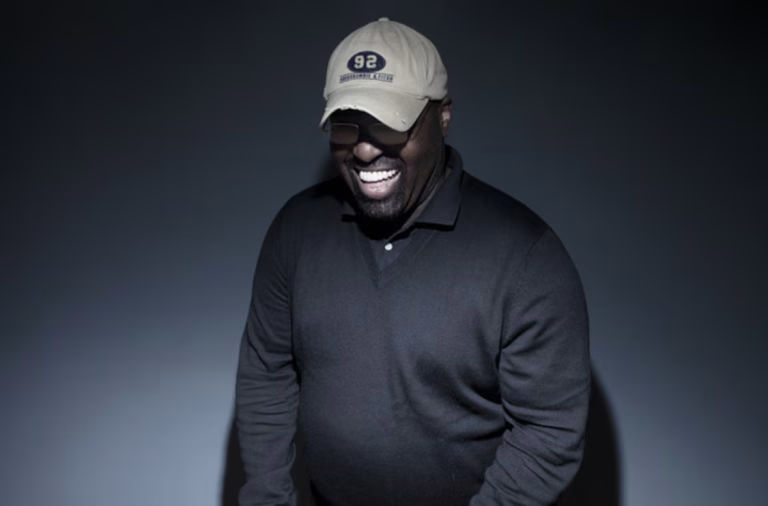
Frankie Knuckles’ life proves that community is the mother of invention. He didn't set out to create a billion-dollar industry; he was simply trying to keep his people dancing in the face of a world that wanted them invisible. He transformed the DJ from a human jukebox into a "priest of the dancefloor," proving that repetitive rhythm could be a form of healing and spiritual release. His legacy still resonates in every club and festival today, reminding us that House music isn't just a sound—it's an inclusive philosophy that says, "If you're under this roof, you belong."
Tuesdays with Junior | Ep 07 | February 17, 2026 Tournament Ready & Test Week Ahead Junior is entering the second tournament of the year — and he’s not just preparing to compete. He’s preparing to compete better. This week’s…
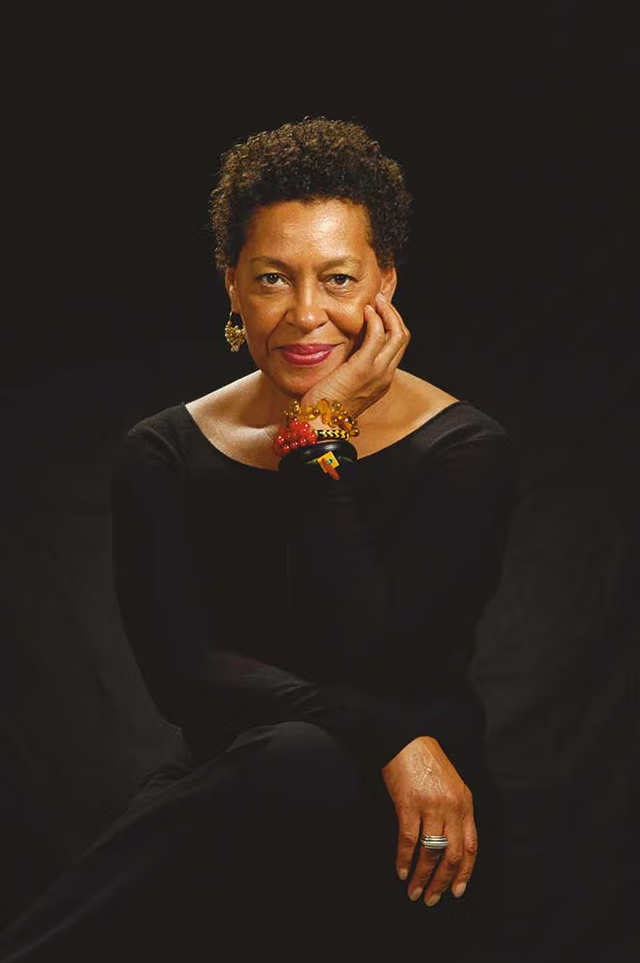
Carrie Mae Weems’s life proves that representation is a form of power. She did not just take pictures; she dismantled the way we "see" race, gender, and class. By placing herself or her subjects in positions of quiet authority, she laid the groundwork for modern visual culture to move beyond stereotypes. Her "voice" still resonates because she demands that we look at the parts of history that are uncomfortable, proving that until we confront the past's visual biases, we cannot truly see the present.
Tuesdays with Junior | Ep 6 | February 10, 2026 It Takes a Village to Build a Champion If there’s one thing Junior Hakizumwami has learned on his journey from Kigali to the Mouratoglou Academy, it’s that no champion is…
February explored how Black joy has never been a reaction to struggle — it is a deliberate social science. From Zora Neale Hurston's folklore to Frankie Knuckles' house music sanctuary, joy is a discipline.
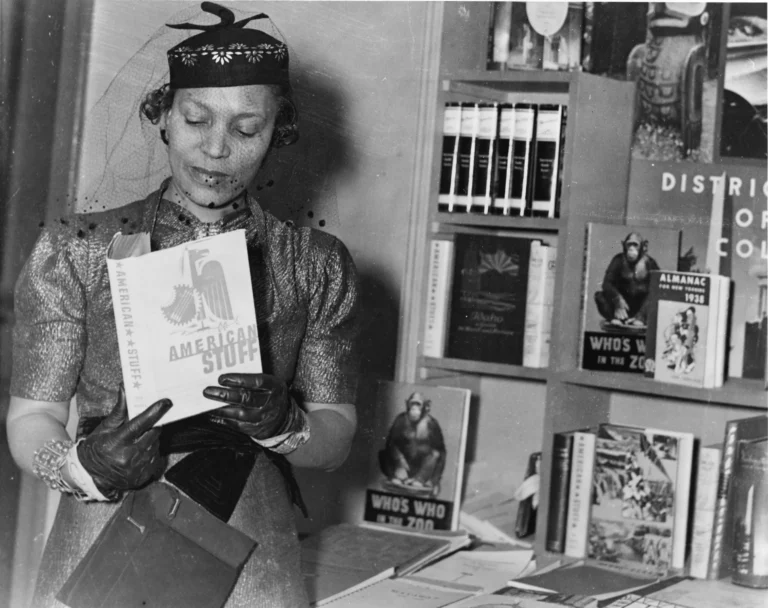
Zora Neale Hurston’s life proves that intellectual sovereignty is the ultimate form of rebellion. She refused to let her identity be defined solely by the tragedy of racism, choosing instead to highlight the joy, complexity, and linguistic richness of her people. Her "voice" resonates today because she reminds us that the stories of the marginalized are not just footnotes—they are the foundation of culture. She laid the groundwork for modern writers like Alice Walker and Toni Morrison by proving that a Black woman’s search for self is a universal epic.