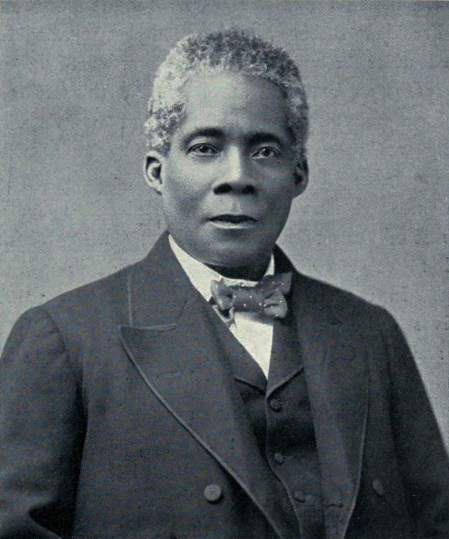
Paul Revere Williams designed more than 3,000 structures across Los Angeles over five decades — from the LAX Theme Building to Frank Sinatra’s private residence — while restrictive covenants legally barred him from living in the very neighborhoods he built. This paradox sits at the center of his legacy: a Black architect who mastered a profession engineered to exclude him, and used that mastery to reshape the visual identity of the American West.
Born in 1894 in Los Angeles, Williams faced his defining moment early. When a high school counselor told him that white clients would never hire a Black architect, and that Black communities couldn’t afford one, he chose not to believe it. He enrolled in architecture school anyway. But he quickly learned that his presence across the table made white clients uncomfortable. His solution was singular: he taught himself to draw upside down, so he could sketch while seated across from clients rather than beside them. This wasn’t defeat. It was strategy — the same strategy he would use throughout his career to penetrate rooms that weren’t designed for him.
Williams’ range was extraordinary. He designed the Palm Springs Tennis Club and the Beverly Hills Hotel. He drew plans for Frank Sinatra, Lucille Ball, and Lon Chaney. He worked on the iconic LAX Theme Building, which still defines the Los Angeles skyline. At the same time, he never abandoned the communities that mainstream architecture ignored. His design of Pueblo del Rio, a public housing development in South Central Los Angeles, proved that good design was a right — not a luxury reserved for the wealthy.
In 1957, Williams became the first Black Fellow of the American Institute of Architects — a title that should have come decades earlier. The institution had no choice but to acknowledge what the city of Los Angeles had known for years: Paul Revere Williams was among the best architects America had ever produced, regardless of any qualifier.
His legacy is the blueprint for working within a hostile system without being consumed by it. Williams never waited for the world to become fair. He adapted his method, built his credentials in rooms designed to reject him, and used his access to pull communities forward that the profession had abandoned. He proved that excellence is a form of defiance — and that the buildings we design outlast every restriction that tried to keep us out. “If I allow the fact that I am a Negro to checkmate my will to do, now, I will inevitably form the habit of being defeatist.”