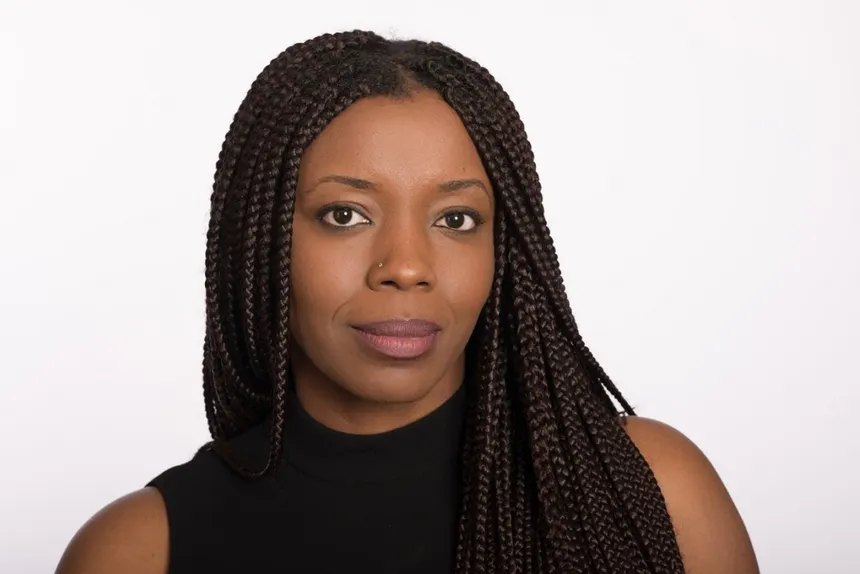
There is a particular kind of courage required to walk away from a lucrative career in technology, return to a country most Western architects have never visited, and build a library from compressed earth. Mariam Kamara did exactly that — and in doing so, became one of the most important architectural voices of the 21st century.
Born in Niger and educated in France and the United States, Kamara spent seven years working in the tech sector before enrolling in architecture school at New York University. The pivot was not impulsive; it was the product of a growing conviction that the built environment of African cities was being shaped almost entirely by foreign aesthetics, imported materials, and Western assumptions about what modernity should look like. She saw buildings made of glass and steel rising in climates where those materials made no sense — expensive to build, expensive to maintain, and culturally alien to the communities living inside them.
Her practice, Atelier Masomi, based in Niamey, Niger, operates from a counter-premise: that the answers were already in the soil. The Hikma Complex — her most celebrated project — transforms a derelict mosque in Dandaji, Niger, into a community library and sacred space using compressed earth bricks. The bricks regulate extreme heat naturally, without air conditioning. The design draws from Hausa architectural tradition while serving a thoroughly contemporary function. This is not nostalgia. It is precision engineering rooted in ancestral knowledge.
Kamara’s argument is both architectural and political. She contends that when African cities import Western design wholesale, they import a worldview that positions local knowledge as inferior. By building with the earth of Niger, she is building with Niger’s identity — proving that what colonial systems called “primitive” is actually sophisticated, sustainable, and adaptive. “For a long time, we have looked at architecture through a Western lens. But architecture must anchor us in our identities.”
Mariam Kamara is the Future of Paul Revere Williams’ relay. Where Williams adapted his method to penetrate hostile Western institutions, Kamara has turned her back on that architecture entirely — and built something better from the ground up. She proves that the most advanced technology is sometimes the one that has been under our feet all along.