
Roots & Futures is a weekly multimedia series produced by the Kodjoe Family Foundation that explores the continuous cycle of Black excellence.
It is built on the concept of the Intergenerational Relay: the idea that our history is not a static museum of the past, but a living blueprint for the future. Every innovation we see today—from equitable AI to modern community land trusts—has a “Root” in the defiance and mastery of an ancestor who came before.
The Architecture of the Series
The series is organized into monthly thematic pillars, each designed to highlight a specific field where Black brilliance has reshaped the world. To make this connection clear, we pair two types of subjects:
The Roots (The Foundation): Historical pioneers who broke systemic barriers to build the infrastructure of our culture. These are the librarians who reclassified history, the scientists who healed the soil, and the organizers who built the first safe spaces.
The Futures (The Evolution): Modern-day visionaries who are taking those ancestral blueprints and scaling them for the 21st century and beyond. These are the computer scientists, urban ecologists, and digital media founders defining what’s next.
Our Core Pillars
Throughout the year, we explore the diverse landscape of Black achievement through themes such as:
- The Architects of Information: How we preserve, categorize, and protect our collective knowledge.
- The Sociology of Joy: The engineering of community, belonging, and cultural preservation.
- The Sovereignty of Land: The mastery of agriculture, ecology, and urban transformation.
- The Philanthropy of the “Non-Elite”: Reimagining wealth and community care through a lens of abundance.
The Mission
The mission of Roots & Futures is to shift the narrative of Black history from one of purely “surviving” to one of “engineering.” We want to provide our audience with more than just inspiration; we want to provide evidence. By showing the direct link between the “Root” and the “Future,” we empower a new generation to see themselves as architects in their own right. Whether in a library in 1930 or a tech lab in 2026, the brilliance remains the same—it is simply evolving.
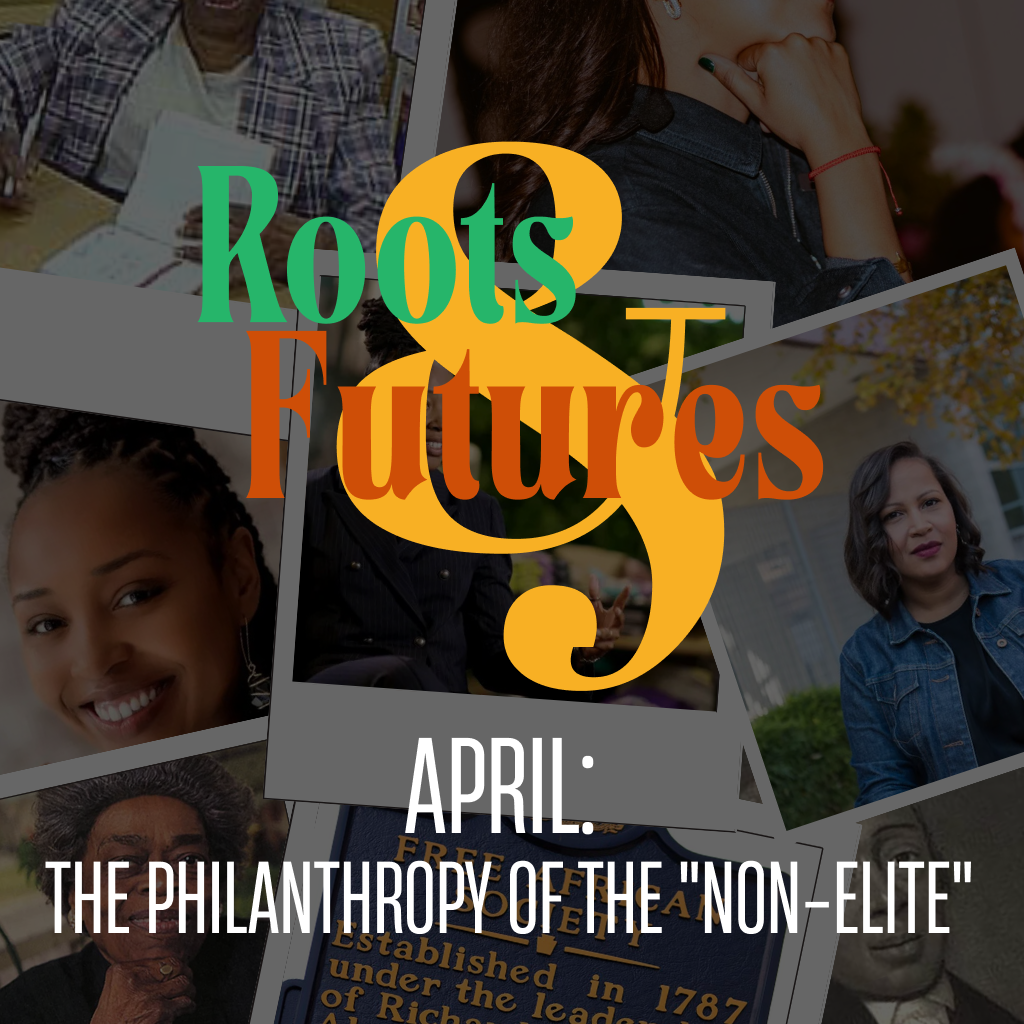 April: The Radical Power of the “Non-Elite” Giver
Philanthropy is often depicted as a top-down endeavor—a benevolent hand extended from a position of extreme surplus. However, the history of the “Non-Elite” giver suggests that the most transformative acts of generosity come not from abundance, but from a profound sense of shared destiny. From the late 18th century to the digital age, Black communal giving has functioned as a radical tool for survival, institution-building, and political reclamation.
The Root: Mutual Aid & Disciplined Sacrifice
The “Root” of this tradition is found in the Free African Society. Founded in 1787, it redefined philanthropy as “Mutual Aid.” By pooling small amounts of money, formerly enslaved people created their own social safety net. This wasn’t “charity” in the modern sense; it was a proto-insurance system that protected the dignity of the community when the state refused to acknowledge their humanity.
This same spirit of quiet, disciplined sacrifice is personified in Oseola McCarty. A washerwoman who lived a life of extreme simplicity, McCarty’s $150,000 gift to a university was a revolutionary act. It challenged the “Great Man” theory of history, proving that the labor of a single individual, when directed toward the collective future, can rival the endowments of billionaires.
The Future: Community Venture Capital & The Modern Village
Moving into the “Future,” we see this legacy of self-reliance evolve into a tool for systemic change. Jessica Byrd and the Electoral Justice Project represent a shift from providing services to building power. By encouraging the “non-elite” to fund political strategists and grassroots organizers, Byrd is reclaiming philanthropy as a form of “community venture capital.” It is no longer just about surviving the system, but about funding the people who will dismantle and rebuild it.
Similarly, Dr. Lakeysha Hallmon and The Village Market demonstrate the evolution of mutual aid into Economic Sovereignty. By engineering a “Modern Economic Village,” Dr. Hallmon has facilitated the circulation of millions of dollars within Black-owned businesses. This continues the Free African Society’s mission by filling the gaps left by traditional retail and banking structures, proving that our collective spending power is a sophisticated philanthropic engine.
The Mission: Rejecting the Savior Complex
The common thread between these four profiles is the rejection of the “savior complex.” In non-elite philanthropy, the donor and the recipient are often the same people, or at least from the same neighborhood. This creates a feedback loop of accountability and dignity. It proves the truth that courage is not the absence of struggle, but the willingness to share what little one has to ensure the struggle is not borne alone.
As we look toward the future, these examples serve as a roadmap. They remind us that the “groundwork for the modern day” was laid by people who used their pennies, their time, and their votes to care for one another. Their voices resonate today because they tell a story of agency: we do not have to wait for the elite to save us when we have always had the power to save ourselves.
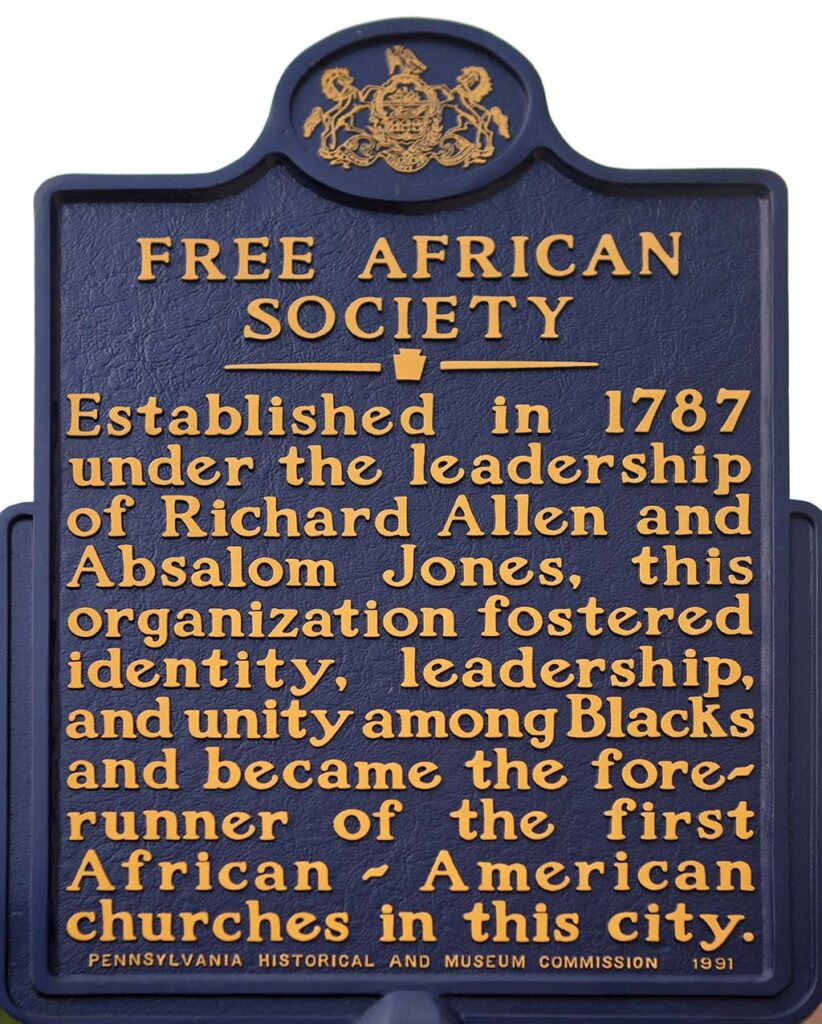
The Free African Society (1787)
Founded in Philadelphia by Richard Allen and Absalom Jones, the Free African Society (FAS) emerged from a moment of profound exclusion. Both men had purchased their freedom but found that even “free” spaces—like the St. George’s Methodist Episcopal Church—were segregated. The turning point occurred when Allen and Jones were pulled off their knees during prayer for sitting in a “white” section. Realizing that true freedom required independent institutions, they formed the FAS to provide the social safety net the government denied them.


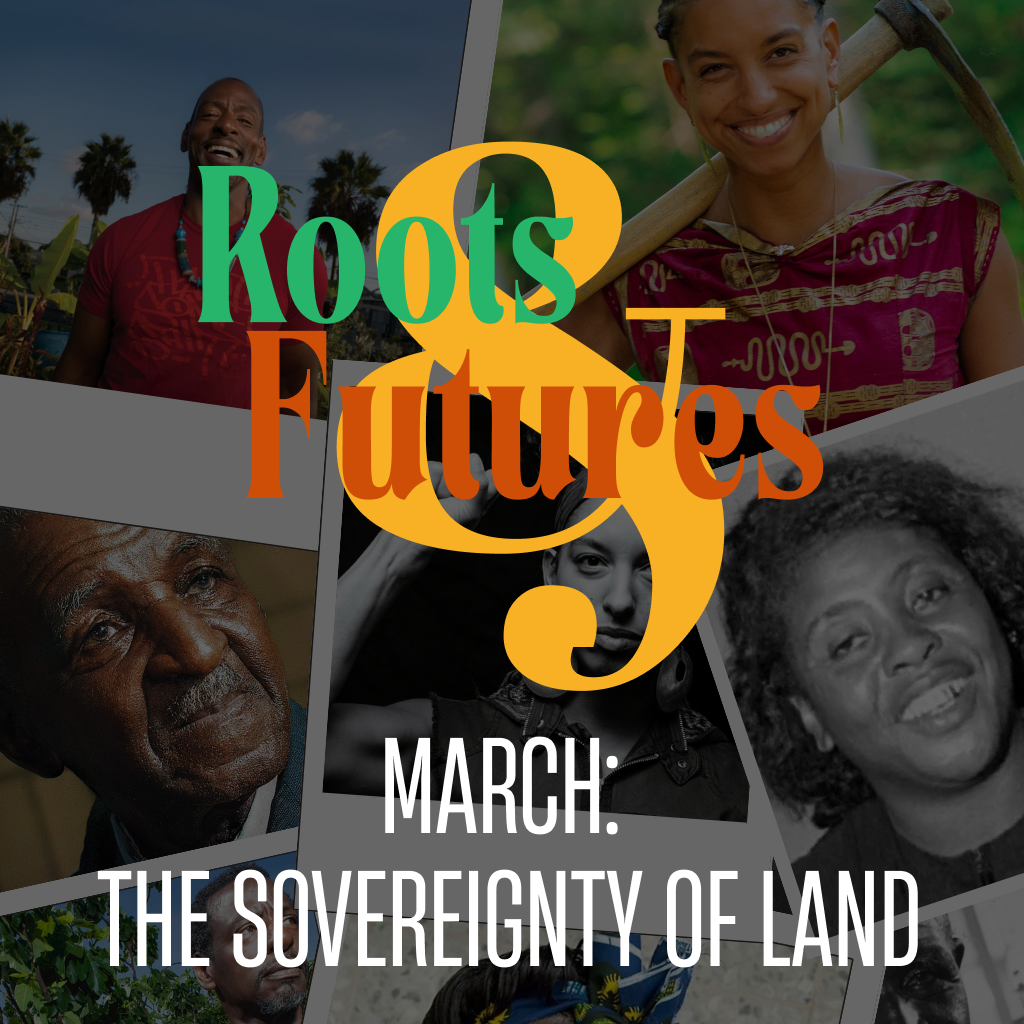 March: The Sovereignty of Land
The third installment of the Roots & Futures series, “The Sovereignty of Land,” grounds our exploration in the very soil that sustains us. Following February’s focus on the spirit, March examines the material foundation of freedom. This month investigates the profound relationship between Black liberation and ecological stewardship, asserting that true autonomy is impossible without a direct, self-determined connection to the earth. We move from the history of forced labor to a future of reclaimed legacy, proving that the land is not just a site of past trauma, but the primary technology for future independence.
Agrarian Liberation & Global Stewardship
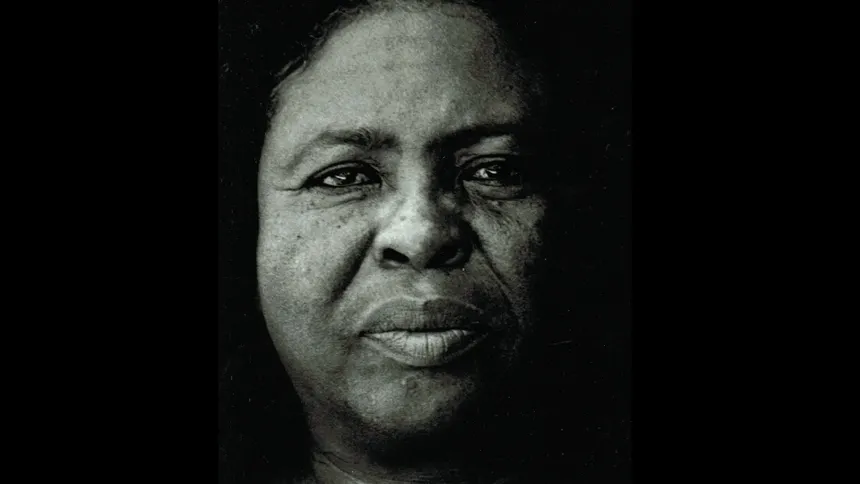
The theme focuses on “Agrarian Liberation”—a refusal to see the soil as a commodity and instead recognizing it as a relative and a resource. The “Roots” of this movement are found in the revolutionary vision of Fannie Lou Hamer. While often remembered for her voting rights activism, Hamer’s “Freedom Farm Cooperative” was perhaps her most radical endeavor. She understood that “if you have 400 quarts of beans and 400 quarts of greens, nobody can make you move.” By establishing a land trust that provided food and housing security, Hamer transformed agriculture into an instrument of political defiance.
This lineage expands through the monumental legacy of Wangari Maathai, the founder of the Green Belt Movement. Maathai recognized that environmental degradation in Kenya was inextricably linked to political oppression and the loss of traditional knowledge. By mobilizing women to plant over 30 million trees, she proved that ecological restoration is a form of democratic resistance. Her work redefined “land sovereignty” as a global necessity, earning her the Nobel Peace Prize and cementing the idea that the health of the soil is the health of the people.
This mantle of land-based healing continues through the “Future” work of Leah Penniman and Soul Fire Farm. Penniman bridges the gap between ancient African farming techniques and modern food justice, leading a global movement to uproot racism in the food system. By teaching the next generation to see the soil as “ancestral matter,” she ensures that the reclamation of land is also a reclamation of identity.
The Science of Sustainability
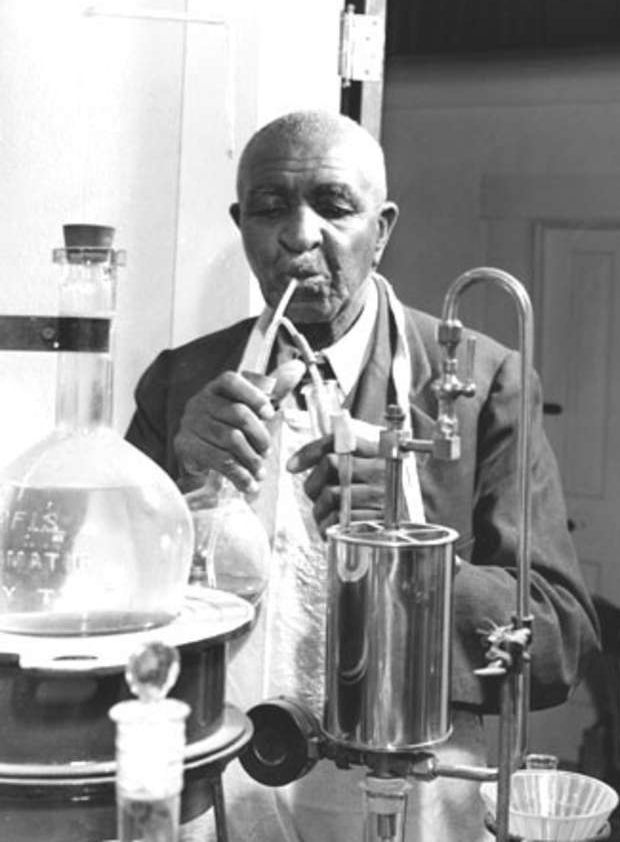
The second half of the month explores the “Science of Sustainability,” beginning with the “Root” brilliance of George Washington Carver. Often simplified as the “Peanut Man,” Carver was actually a pioneer of regenerative agriculture and the father of industrial ecology. Long before the modern “Green Revolution,” Carver taught Southern farmers how to restore nitrogen to the soil through crop rotation and organic composting, viewing the Earth as a closed-loop system of divine efficiency.
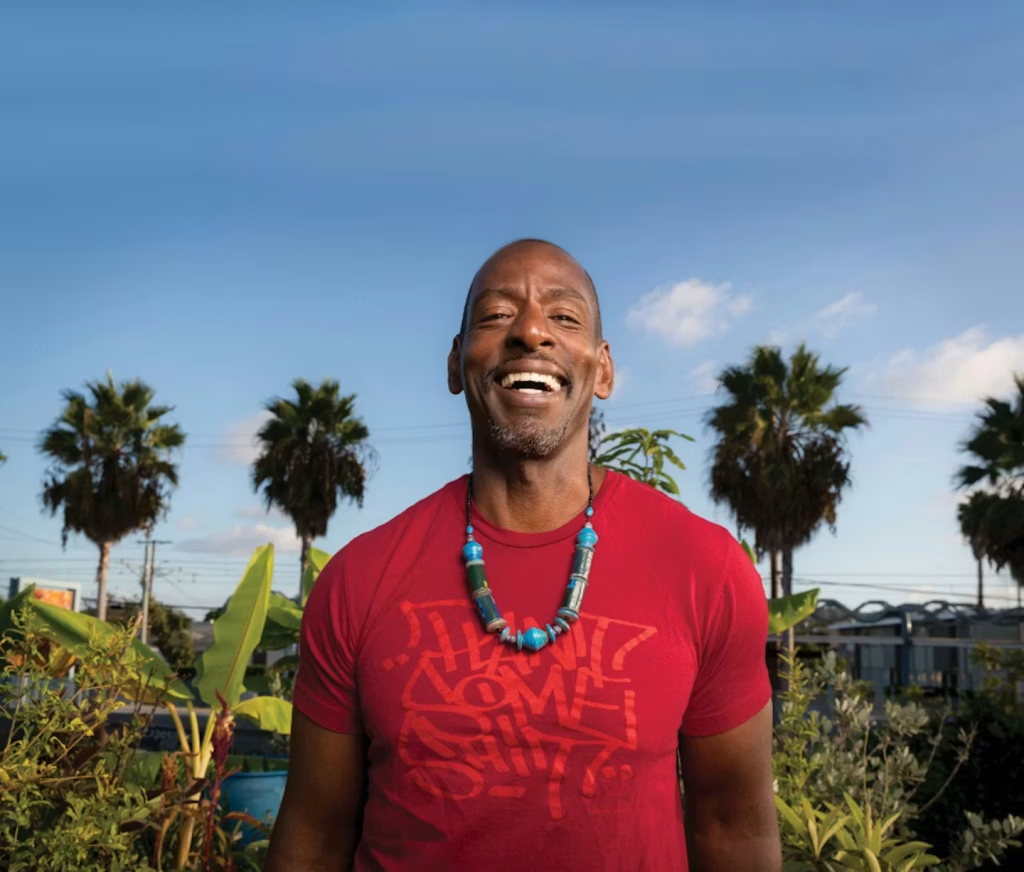
His scientific rigor finds its “Future” counterpart in Ron Finley, the “Gangsta Gardener” of South Central Los Angeles. Finley has taken Carver’s principles of soil health and transplanted them into the “food deserts” of the concrete jungle. By converting parkways and vacant lots into thriving urban forests, Finley demonstrates that gardening is a subversive act of urban planning. He proves that when we cultivate the land, we aren’t just growing food—we are growing community, health, and sovereignty in the heart of the city.
March teaches us that the ground beneath our feet is a living archive. From the cooperative farms of the Mississippi Delta and the forested hills of Kenya to the raised beds of South Central, “The Sovereignty of Land” reveals that the path to the future is paved with the seeds of our ancestors.
Fannie Lou Hamer
Fannie Lou Hamer’s life proves that political power does not require an elite pedigree; it requires an unbreakable will. She shattered the “respectability politics” of the era, proving that a sharecropper’s voice could be just as influential as a Senator’s. Her legacy laid the groundwork for the modern voting rights movement and intersectional advocacy, reminding us that “nobody’s free until everybody’s free.”

Leah Penniman
Leah Penniman shows that environmentalism is inseparable from racial justice. She demonstrates that the soil is not just a medium for crops, but a medium for healing historical wounds. By reclaiming the title of “farmer” as an act of liberation rather than one of servitude, she has laid the groundwork for a future where food sovereignty is a universal right, and her voice resonates as a call to return to the earth to find our collective freedom.
George Washington Carver
George Washington Carver’s life proves that true genius is found in service. He refused to patent most of his discoveries, believing that “God gave them to me, why should I sell them to someone else?” His work laid the groundwork for modern environmentalism and sustainable agriculture, proving that human survival depends on a harmonious, scientific relationship with the earth. His “voice” resonates today as a reminder that innovation should serve the many, not just the few.
Ron Finley
Born and raised in South Central Los Angeles, Ron Finley grew up in a “food desert” where drive-thrus were more common than driveways and liquor stores outnumbered grocery stores. A successful fashion designer by trade, his life’s “turning point” came in 2010 when he grew tired of driving 45 minutes just to find a tomato that hadn’t been chemically treated. He decided to plant a garden in the small strip of dirt between the sidewalk and the street—the parkway—in front of his house. This simple act of planting carrots and kale led to a citation and an arrest warrant from the City of Los Angeles, sparking a grassroots rebellion against the city’s definition of “land use.”
 February: The Sociology of Joy
The second chapter of the Roots & Futures series, “The Sociology of Joy,” shifts our gaze from the structural archives of the mind to the vibrant, lived textures of the spirit. While January focused on the defense of truth, February explores the radical preservation of happiness. This month serves as a deep dive into how Black joy has never been a mere reaction to struggle, but a deliberate, sophisticated social science—a methodology of communal survival and self-actualization that persists across generations.
The theme centers on the “Cartography of the Heart,” examining how Black creators have mapped out spaces where the soul can rest, play, and be seen without the weight of the external gaze. We begin with the “Roots” of this exploration in the work of Zora Neale Hurston. Beyond her literary acclaim, Hurston was a rigorous anthropologist who understood that the “folk” culture of the American South was a treasure trove of psychological resilience. By documenting play-songs, tall tales, and front-porch banter, she proved that Black life was defined by its internal richness rather than its external limitations. This ethos of centering the domestic and the personal found its “Future” expression in Carrie Mae Weems’ The Kitchen Table Series. Weems used the lens of a camera to transform the most mundane setting—a kitchen table—into a stage for the profound. Her work demands that we look at the quiet, everyday moments of Black womanhood and family life not as “private” matters, but as vital sociopolitical statements of existence and affection.
As the month unfolds, we transition from the domestic to the communal, exploring the “Sonic Sanctuaries” built in the heat of the urban night. Frankie Knuckles, the “Godfather of House Music,” engineered a revolution in Chicago by blending disco, soul, and gospel into a new frequency. Knuckles didn’t just create a genre; he built a sanctuary—a space where the marginalized could find a collective euphoria that the outside world denied them. This legacy of curated well-being is carried into the modern day by Rachel Cargle, the “Architect of Ancestral Joy.” Cargle’s work through initiatives like The Loveland Foundation and Elizabeth’s Bookshop reimagines joy as a form of social justice. By prioritizing Black mental health and intellectual pleasure, she echoes the anthropological care of Hurston, ensuring that the modern pursuit of happiness is rooted in ancestral wisdom and future-facing healing.
February reminds us that joy is a discipline. It is a social structure built with intention, rhythm, and love. By bridging the gap between the rural play-songs of the past and the digital communities of the present, “The Sociology of Joy” demonstrates that our laughter has always been our most potent form of liberation.
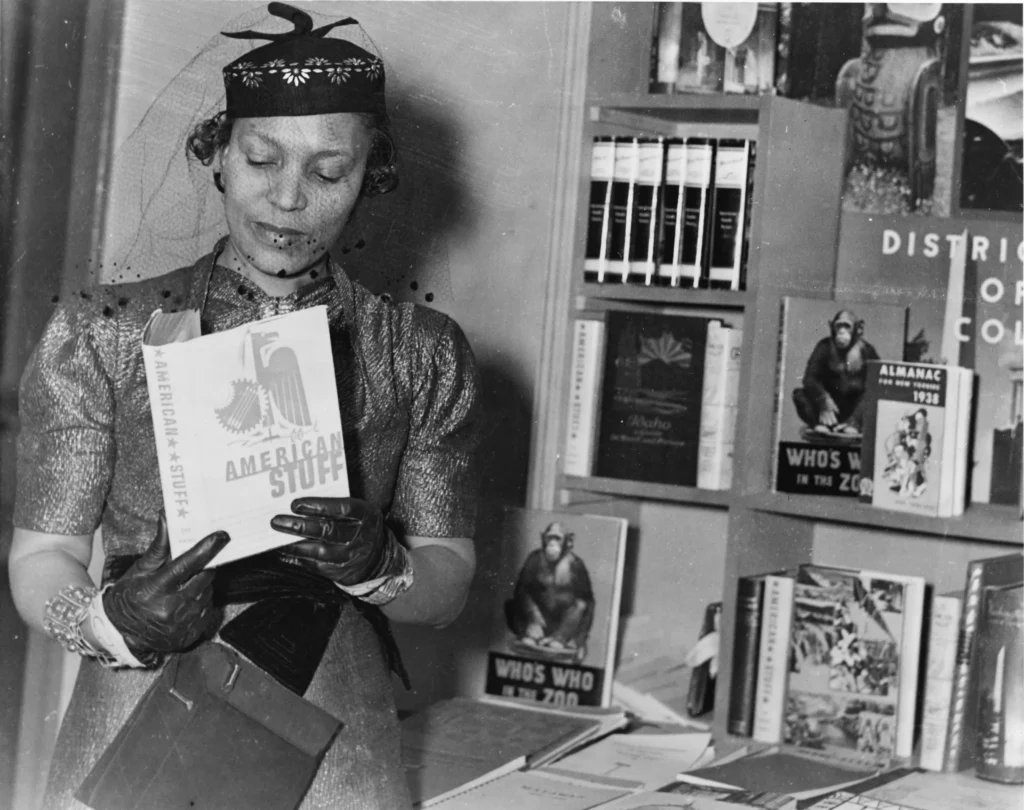
Zora Neale Hurston
Zora Neale Hurston’s life proves that intellectual sovereignty is the ultimate form of rebellion. She refused to let her identity be defined solely by the tragedy of racism, choosing instead to highlight the joy, complexity, and linguistic richness of her people. Her “voice” resonates today because she reminds us that the stories of the marginalized are not just footnotes—they are the foundation of culture. She laid the groundwork for modern writers like Alice Walker and Toni Morrison by proving that a Black woman’s search for self is a universal epic.
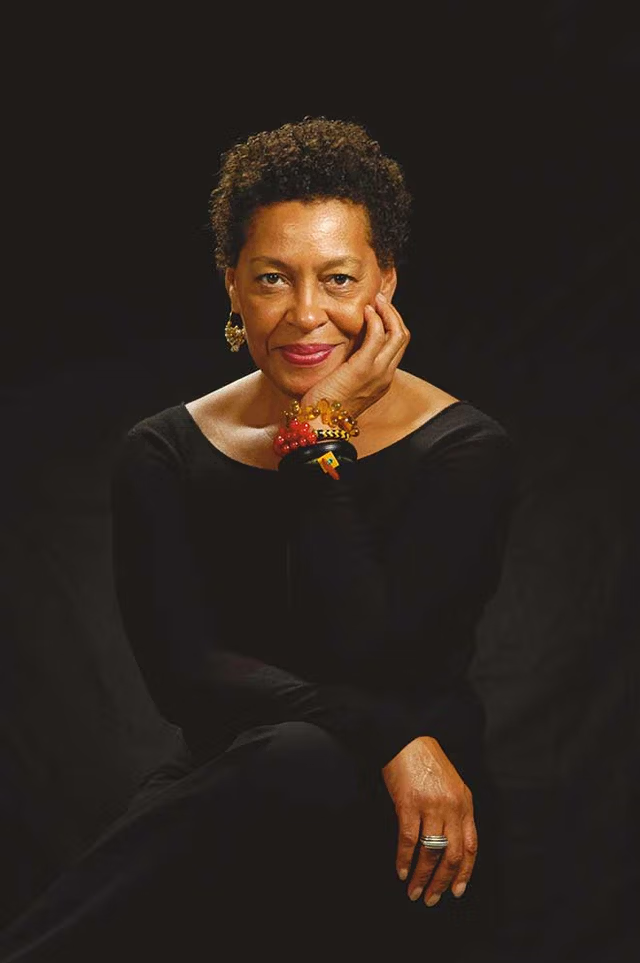
Carrie Mae Weems
Carrie Mae Weems’s life proves that representation is a form of power. She did not just take pictures; she dismantled the way we “see” race, gender, and class. By placing herself or her subjects in positions of quiet authority, she laid the groundwork for modern visual culture to move beyond stereotypes. Her “voice” still resonates because she demands that we look at the parts of history that are uncomfortable, proving that until we confront the past’s visual biases, we cannot truly see the present.

Frankie Knuckles
Frankie Knuckles’ life proves that community is the mother of invention. He didn’t set out to create a billion-dollar industry; he was simply trying to keep his people dancing in the face of a world that wanted them invisible. He transformed the DJ from a human jukebox into a “priest of the dancefloor,” proving that repetitive rhythm could be a form of healing and spiritual release. His legacy still resonates in every club and festival today, reminding us that House music isn’t just a sound—it’s an inclusive philosophy that says, “If you’re under this roof, you belong.”

Rachel Cargle
Rachel Cargle’s life proves that joy is a metric of success. She has laid the groundwork for a modern movement where “self-care” isn’t just a marketing buzzword, but a political strategy for survival. Her “voice” resonates because she challenges the idea that Black history is only a history of pain. She reminds us that the groundwork for the modern day wasn’t just laid by those who fought, but by those who had the courage to imagine a world where they were already free, happy, and whole.
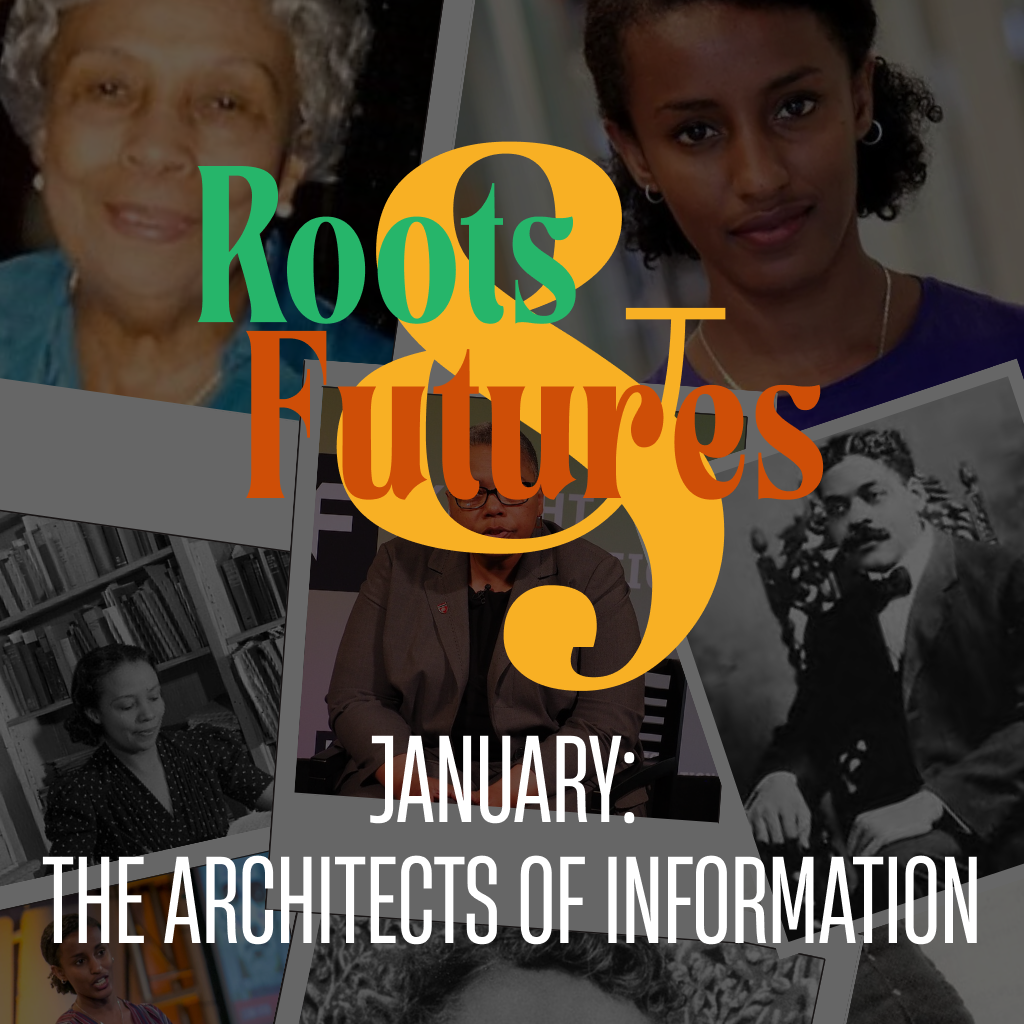 January: The Architects of Information
The inaugural month of the Roots & Futures series, “The Architects of Information,” served as a foundational exploration into the invisible structures that govern our understanding of human history. At its core, this month was a masterclass in how knowledge is preserved, categorized, and protected. We moved through a century of progress, demonstrating that while the tools of information have evolved from ink-stained library cards to complex neural networks, the central mission remains the same: the defense of truth against the tide of erasure.
The theme focused on the “Classification of Brilliance”—a direct challenge to the historical tendency of mainstream institutions to treat Black life as a monolith of tragedy. In the early 20th century, the “Roots” of this movement, figures like Dorothy Porter Wesley and Arturo Schomburg, realized that the archives of the world were being used as weapons of exclusion. Schomburg, the “History Hunter,” traveled the globe to rescue the physical artifacts of the African Diaspora, proving that Black excellence was not a series of isolated events but a global, interconnected legacy. Simultaneously, at Howard University, Dorothy Porter Wesley staged a silent revolution within the library stacks. By subverting the Dewey Decimal System, she physically moved Black authors out of the “Slavery” and “Negro Problem” sections and into their rightful academic fields of Art, Science, and Philosophy. These pioneers understood that as long as our history was “shelved” as a problem, we could never be acknowledged as creators of civilization.
As the series progressed into the modern era, we witnessed the “Future” of this architectural work through the lenses of Rediet Abebe and Latanya Sweeney. In the 21st century, the library has moved into the cloud, and the card catalog has become the algorithm. Rediet Abebe, a pioneer in computer science, picked up the baton by auditing the very code that governs our lives. She realized that tech “efficiency” often hides the same systemic biases that Wesley fought decades ago. By using mathematical modeling to ensure algorithmic fairness, Abebe is ensuring that the digital future is as inclusive as the archives Wesley built. This was reinforced by the work of Latanya Sweeney, whose “data detective” work proved that in a world of Big Data, privacy is a civil right. Sweeney’s ability to unmask bias in search engines serves as a modern safeguard, ensuring that technology protects our identity rather than profiling our existence.
January taught us that information is never neutral. How we organize a database or a library dictates who is seen and who is forgotten. By bridging the gap between the historical archive and the digital lab, “The Architects of Information” proved that Black excellence has always been a calculated, engineered endeavor.

Dorothy Porter Wesley
Dorothy Porter Wesley The Librarian Who Reordered the World In the quiet aisles of the Moorland-Spingarn Research Center at Howard University, a quiet revolution was

Rediet Abebe
Rediet Abebe Engineering the Path to Algorithmic Justice In the traditional narrative of scientific excellence, mathematics is often presented as a pursuit of “pure” truth—a

Arturo Schomburg
Arturo Schomburg’s life proves that identity is a radical act of assembly. By refusing to let a teacher’s lie stand, he built the physical evidence required to challenge global white supremacy. He laid the groundwork for modern Black Studies by showing that history is not just a collection of stories, but a war chest of evidence used to fight for human dignity. His “voice” resonates today every time a student discovers an ancestor who was erased from the curriculum.
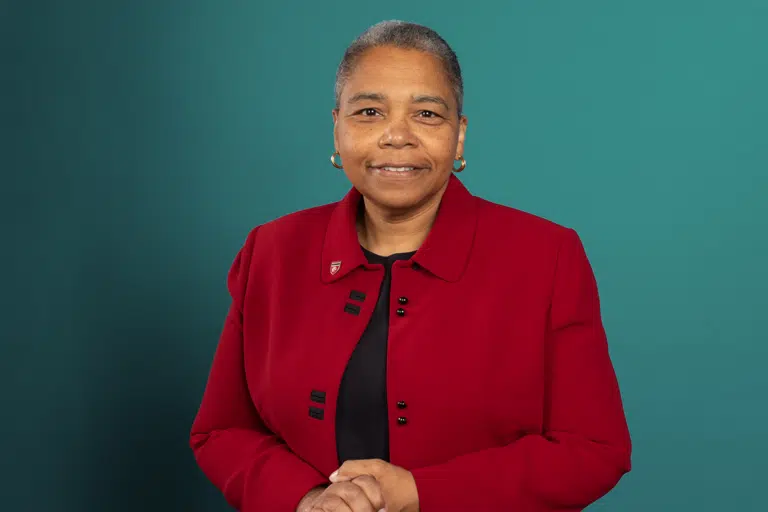
Latanya Sweeney
Latanya Sweeney’s life proves that privacy is a civil right. While her historical counterparts fought to make Black history visible, she fights to ensure that modern Black lives aren’t unfairly targeted or “profiled” by the data systems that govern our world. She laid the groundwork for modern data ethics, reminding us that behind every algorithm is a human being whose story deserves protection.