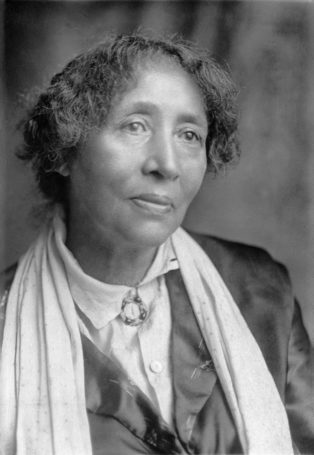
In the late 19th century, Chicago was the epicenter of the industrial world, a city of steel, smoke, and sweat. In the middle of this chaos stood Lucy Parsons, a woman whose voice was so powerful it terrified the establishment. To the police and the “robber barons” of the era, she was a threat to the social order. To the thousands of workers who crowded into the streets to hear her speak, she was the first person to articulate a world where their labor belonged to them, not to their masters.
Parsons’ life was one of constant defiance. Born in the shadow of slavery, she understood early on that the American economic system was built on the extraction of life from Black and brown bodies. When she arrived in Chicago, she found that the industrial “freedom” of the North was just another form of confinement. Workers were expected to toil for twelve to fourteen hours a day in deathtrap factories for pennies. Parsons didn’t just want a raise; she wanted a revolution of the mind. She became a founding member of the movement for the eight-hour day, arguing that a human being is more than a tool of production. They deserve time for rest, for family, and for “what they will.”
Her philosophy was unique for its time because it was truly intersectional before the word existed. While many early unions were segregated and focused only on “skilled” white male workers, Parsons insisted on a “One Big Union” that included everyone—women, immigrants, and Black workers. At the founding of the Industrial Workers of the World (IWW) in 1905, she stood as a singular force, reminding the world that the “care economy” and the “industrial economy” were two sides of the same coin. She understood that if one group was left behind, the entire labor movement would eventually fail.
Lucy Parsons’ story matters today because she reminds us that the “status quo” is often just a set of rules written by those who benefit from them. Her radicalism wasn’t born of a desire for chaos, but a desire for justice. She spent her final years—even after she had gone blind—continuing to attend labor rallies and support the next generation of organizers.
When we clock out after an eight-hour shift today, we are experiencing the legacy of Lucy Parsons. She was the Root who planted the seeds of the modern weekend, proving that the most dangerous thing in the world is a person who refuses to believe they are a commodity. “Never be deceived that the rich will allow you to vote their wealth away.”